
November 4, 2026 | 5 minutes read
As 2026 draws to a close, the remaining weeks present a valuable window to refine your tax position, investment strategy, and long-term planning. Decisions made before December 31 can have a meaningful and lasting impact, and a considered review now helps ensure your plan remains aligned with your broader objectives.
We have prepared a year-end checklist highlighting the key opportunities to evaluate. Below are our Top Year-End Wealth Planning Priorities to review before the new year begins:
1. Take Required Minimum Distributions (RMDs)
If you are age 73 or older (age 75 for those born in 1960 or later), ensure your Required Minimum Distribution has been taken from your retirement accounts to avoid costly IRS penalties. For those charitably inclined and age 70½+, a Qualified Charitable Distribution (QCD) can satisfy your RMD while supporting charitable causes in a tax-efficient way.
Failure penalty: 25% of missed RMD (reduced to 10% if corrected promptly)
2. Rebalance Your Portfolio with Tax Efficiency in Mind
Year-end is an ideal time to:
- Review your asset allocation relative to your goals
- Improve tax efficiency through tax-loss harvesting and strategic asset placement
- Reduce concentration in single stocks or sectors
This ensures your portfolio enters the new year aligned and disciplined.
3. Maximize Retirement Contributions
Make sure you are taking full advantage of the following:
- 401(k), 403(b), and other employer plans
- IRA and Roth IRA contributions
- Catch-up contributions, if eligible
- Business owner retirement options such as SEP
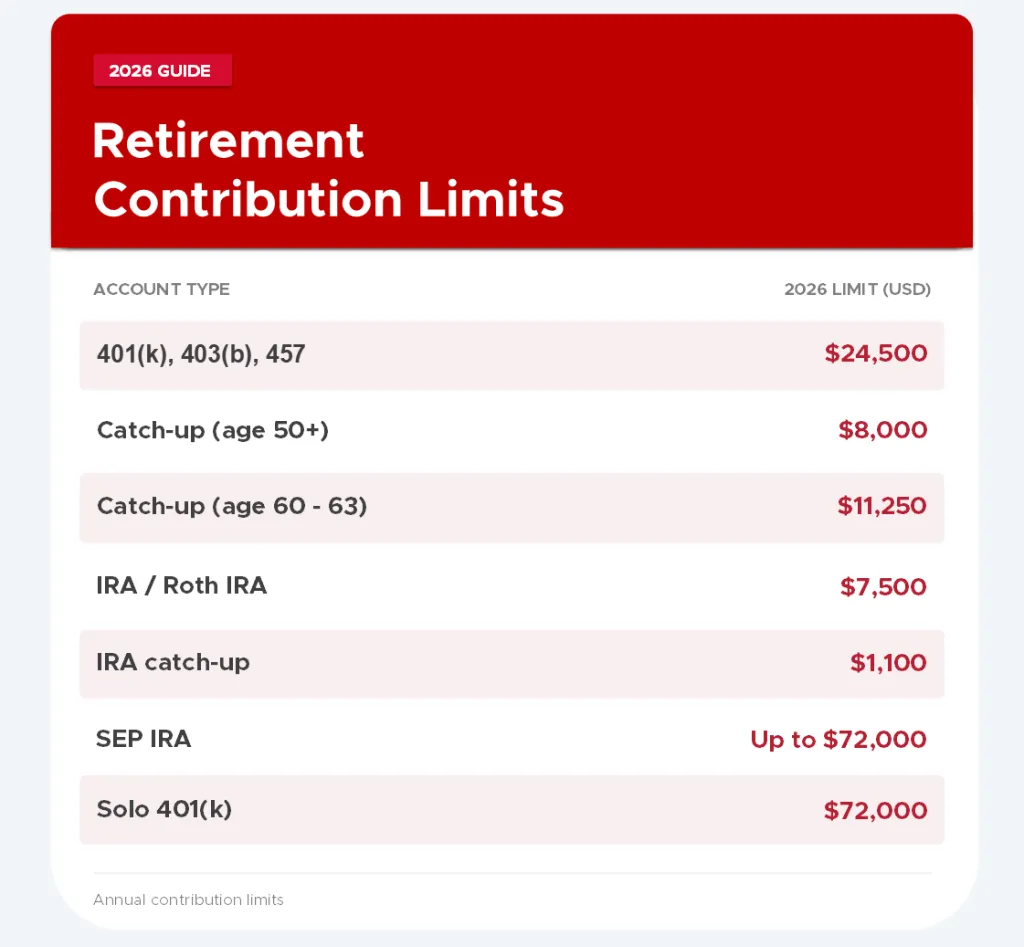
These contributions can meaningfully improve both current tax efficiency and long-term retirement security.
4. Evaluate Roth Conversion Opportunities
Roth conversions remain one of the most powerful long-term tax planning tools. Year-end is the time to:
- Assess whether current tax rates make partial conversions attractive
- Align conversions with your long-term tax bracket expectations
- Carefully plan how taxes from the conversion will be paid
Note: RMDs must be taken first before any Roth conversion.
5. Review Income Timing & Equity Compensation
If your income is variable, you may benefit from:
- Deferring or accelerating bonuses
- Timing RSU vesting, stock option exercises, or business income
- Managing Adjusted Gross Income (AGI) to preserve deductions or avoid surcharges
Small timing decisions can have an outsized impact on your total tax bill.
6. Optimize Charitable Giving Strategies
Charitable giving can be optimized through:
- Donating appreciated securities instead of cash
- Using a Donor-Advised Fund (DAF)
- Bunching charitable contributions across tax years
- Implementing QCDs for retirees
Under the new One Big Beautiful Bill, beginning in 2026, itemized charitable deductions will only be allowed to the extent they exceed 0.5% of Adjusted Gross Income (AGI). As a result, larger, more strategic gifts, such as bundled donations or donor-advised fund contributions, will become more tax-efficient than smaller annual gifts
7. Review Estate Planning & Annual Gifting
Before year-end, you shall consider:
- Using annual gift-tax exclusions for family transfers
- Reviewing lifetime estate exemption usage
- Updating wills, trusts, powers of attorney, and beneficiaries if there are life events happened in 2026
- Ensuring distribution structures still reflect your family goals
Estate planning works best as a living strategy, not a one-time document.
8. Review Insurance, Risk & Major Life Changes
If you experienced significant changes this year; such as marriage, divorce, a new child, relocation, business sale, or major asset growth, it’s critical to:
- Reassess life, disability, long-term care, and umbrella liability coverage
- Ensure current insurance aligns with your risk exposure and estate plan
Protection planning is often overlooked but financially devastating if neglected.
9. Plan Ahead with Your Advisory & Tax Team
Now is the time to:
- Review projected taxes and withholding
- Adjust estimated payments if needed
- Coordinate tax, investment, and estate planning in an integrated way
- Set strategic priorities for the year ahead
Proactive planning before year-end prevents rushed decisions during tax season.
Closing Thoughts
Year-end is not a deadline to rush. It’s an opportunity to make sure the year’s decisions fit the bigger picture. For families with more moving parts, the best results come when investments, taxes, estate strategy, philanthropy, and risk management are planned together.
If you would like to schedule a year-end review, or talk through which of these strategies fit your situation, we would be glad to help.
DISCLOSURES
The information provided is for educational purposes only. The views expressed here are those of the author and may not represent the views of Leo Wealth. Neither Leo Wealth nor the author makes any warranty or representation as to this information’s accuracy, completeness, or reliability. Please be advised that this content may contain errors, is subject to revision at all times, and should not be relied upon for any purpose. Under no circumstances shall Leo Wealth be liable to you or anyone else for damage stemming from the use or misuse of this information. Neither Leo Wealth nor the author offers legal or tax advice. Tax services provided are separate from the Securities or Advisory services offered through Leo Wealth Americas. Please consult the appropriate professional regarding your individual circumstance. Past performance is no guarantee of future results.
This material represents an assessment of the market and economic environment at a specific point in time. It is not intended to be a forecast of future events or a guarantee of future results.
